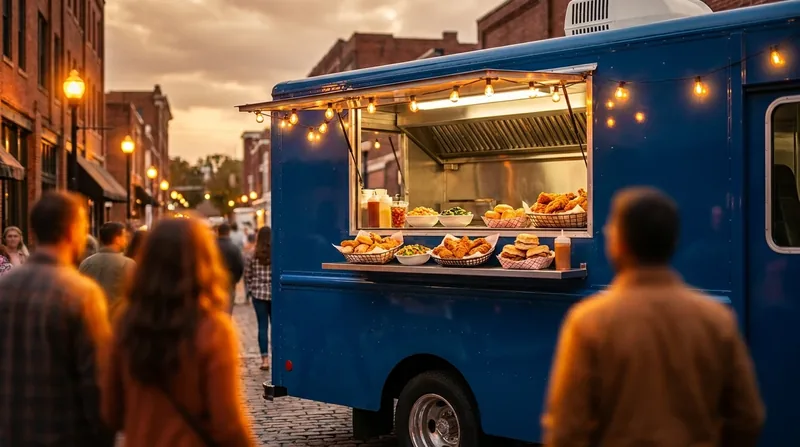
How to Start a Food Truck in South Carolina: SCDA Mobile Permit, Commissary and City Rules
How to Start a Food Truck in South Carolina: SCDA Mobile Permit, Commissary and City Rules
Starting a food truck in South Carolina is mostly a permitting project with a kitchen attached. Food safety is handled by the South Carolina Department of Agriculture (SCDA), taxes run through the South Carolina Department of Revenue (SCDOR), and the local rules are set by each city and county where you park. Many operators searching for how to start a food truck business in SC expect one master license. South Carolina does not issue one. This guide walks through the order that works, the fees and deadlines you can plan around, and the items you should confirm directly with the agency.
Disclaimer: This article is informational content, not legal or tax advice. Talk with a South Carolina attorney and a certified public accountant before you form an entity, sign a lease, or buy a truck, especially if you plan to operate in more than one city.
How South Carolina Food Truck Permits Fit Together
Before you file anything, understand the three layers. The state layer covers your business entity and taxes, and the food safety layer is the SCDA mobile food permit. The local layer is the business license and vending permits issued by each city or county you serve. South Carolina has no general statewide business license. A Secretary of State filing is not a business license, so a registered LLC can still be unable to operate legally on a given street.
Food safety moved from DHEC to the South Carolina Department of Agriculture on July 1, 2024. If an older article or a neighbor tells you to call DHEC about your food truck permit, they are working from outdated information. Your food permit now comes from SCDA.
Materials and Documents You Need Before You Start
Gather these items before you submit any application. Missing one usually means a second trip to a government office or a rescheduled inspection.
- A business name, checked for availability on the Secretary of State business search
- A decision on entity type. Sole proprietorships and general partnerships do not file organizing documents with the Secretary of State. A limited liability company (LLC) is the most common choice for a single truck that needs liability separation.
- A federal Employer Identification Number (EIN) from the IRS, which is free to obtain directly from the IRS
- A signed agreement with a permitted commissary, including the commissary's own SCDA permit information
- A food handler certificate from an accredited program for the person in charge of the unit
- A written menu listing every product you plan to serve and how each one is prepared, cooled, held, and reheated
- A truck or trailer specification sheet with an equipment list, including handwashing, water supply, hot water, refrigeration, and waste holding, confirmed against SCDA requirements
- Liability insurance, which you should price before buying the vehicle
- A budget that covers the $110 LLC filing fee if you form one, the $100 initial SCDA permit fee, the $50 SCDOR Retail License fee, and the local license fees for each jurisdiction
Step 1: Choose Your Entity and File It
Your first state filing depends on how you organize. If you operate as a sole proprietor, there is no Secretary of State filing, though you still need the tax registrations and local permits covered below. If you want an LLC, file Articles of Organization for a Domestic Limited Liability Company under S.C. Code Section 33-44-203.
The LLC filing fee is $110. File through Business Entities Online at businessfilings.sc.gov. Documents filed online are returned within 24 to 48 business hours. The Secretary of State does not publish a separate expedite fee, so online filing is the fastest path. Mailed and in-person filings take longer, and the state does not publish a mail turnaround window.
Your LLC name must contain the words limited liability company or limited company, or an abbreviation such as LLC, L.L.C., LC, or L.C. The name must also be distinguishable from other registered names on the state records. If you need time to finish your paperwork, a name reservation costs $25 and lasts 120 days. The reservation cannot be renewed, so file the formation documents before it expires.
Your articles must name a registered agent with a South Carolina street address for service of process. The agent must be a South Carolina resident, a domestic corporation, another LLC, or an authorized foreign entity. South Carolina LLCs do not file an annual report. Whether to elect corporate tax treatment is a question for your CPA.
Step 2: Register for Taxes and Get Your Retail License
Get your EIN from the IRS, then register with SCDOR through the Business Tax Application on MyDORWAY. If you sell tangible goods, you need a SCDOR Retail License. The fee is a one-time, nonrefundable $50 per location, applied for through the Business Tax Application. Most food truck operators selling taxable items will need one, but confirm with SCDOR how sales tax applies to your specific menu, including prepared food and any beverages.
The state sales tax rate is 6 percent. Apply for the Retail License at the SCDOR licensing page. If you operate under a trade name, list that name on both the IRS EIN application and the SCDOR Business Tax Application.
Step 3: Lock In a Permitted Commissary
Every mobile food unit in South Carolina must be associated with a permitted commissary. Your truck is the serving unit, but the commissary is the base where you store food and supplies, handle prep work the truck cannot safely do, and support daily operations. The commissary relationship is filed with SCDA on the mobile food establishment supplement, so SCDA needs to know which commissary you will use before your unit can be permitted.
Ask each commissary for its SCDA permit information, its operating hours, and a written agreement that spells out access, storage, prep rights, and any cleaning or waste services. Confirm with SCDA what a commissary must provide and what records you must keep. Do not treat the commissary as a formality. Operators who sign with a commissary that cannot support their menu or schedule usually discover the mismatch only after the permit application is already in progress.
Step 4: Get the Food Handler Certificate
The person in charge of a mobile unit needs at least an accredited food handler certificate. Complete the course before your inspection, and keep a copy of the certificate in the truck during operation. Ask SCDA which programs it accepts, because not every online course qualifies.
Plan for backup coverage. If your only certified person is out sick on a festival weekend, you may have to cancel service. Certify at least one additional staff member before you open.
Step 5: Plan the Truck and Equipment Before You Buy
Many first-time operators buy a used truck, then learn it cannot meet the layout and equipment expectations for a mobile food unit. Bring your equipment plan and a written menu to SCDA before you commit money to the vehicle. A short conversation at this stage costs far less than retrofitting a finished truck.
If you hire a contractor to build out a trailer, install plumbing, or add electrical or fire suppression work, check licensing before you sign. Commercial contractor licensing applies to jobs above $10,000, and residential specialty registration applies above $500. Confirm the rules with the state agency that oversees contractor licensing before you hire anyone.
Also ask your local fire department whether it inspects mobile food units. A bill to require fire department inspections of mobile food units, H.5523, was introduced in April 2026 and has not been enacted. Do not assume it is law either way. Ask the local fire marshal for the current requirement in each city where you plan to operate.
Step 6: Apply for the SCDA Mobile Food Establishment Permit
Submit your SCDA retail food establishment application, with the mobile food establishment supplement that identifies your commissary, at least 30 days before your planned opening date. The initial permit fee is $100. You also pay an annual inspection fee based on your food sales, which starts at $100 for up to $250,000 in food sales. Confirm the fee for higher sales volumes directly with SCDA before you budget.
South Carolina does not issue a paper permit. The grade sticker is the permit, so passing inspection is what puts your permit in place. Schedule your opening with that in mind. Display the grade sticker as SCDA directs, and keep your documentation current, because inspectors will check both the truck and your records.
Step 7: Obtain Your Local Business License
Most cities in South Carolina levy a local business license tax. Nine counties also levy one: Beaufort, Charleston, Dorchester, Horry, Jasper, Marion, Orangeburg, Richland, and Sumter. Their license year runs May 1 to April 30, and licenses are due April 30. Renew through localblrenewal.com.
Which license you need depends on where you park and sell. Operators planning a Charleston food truck route should check both the City of Charleston and Charleston County, because the city's rules and the county's rules may apply to different locations. The same is true for a Myrtle Beach food truck. Horry County is on the county list, and the City of Myrtle Beach sets its own requirements. Ask each business license office which jurisdiction covers your intended spots before you commit to a route.
Because there is no state DBA filing, a trade name goes on your local business license application. If you use a trade name, the SCDOR and IRS registrations should list it as well. The Secretary of State does not register DBA or trade names.
Step 8: Secure Vending and Special Event Permits in Each Town
Each town you serve may require its own vending permit, special event permit, or location approval. Map your planned route and your event calendar, then contact each city's business license or planning office. Ask specifically about curbside vending, private property with the owner's permission, beach and boardwalk areas, and festival or market vendor rules.
Expect separate paperwork for each event. A permit that covers your regular stop may not cover a street festival, a brewery private event, or a parking lot next to a construction site. Missing an event permit is one of the faster ways to lose a booking you already paid for.
Common Mistakes to Avoid
- Treating the Secretary of State filing as a business license. The state filing registers your entity. It does not authorize you to sell on any particular street.
- Waiting for a paper permit. South Carolina issues no paper permit. The grade sticker is the permit.
- Applying less than 30 days before opening. The 30-day minimum is the one timing rule in this process that you cannot shorten.
- Signing a commissary agreement after the truck is built. The mobile food supplement must identify your commissary, and the commissary has to support your menu and hours.
- Buying the truck before the layout review. Retrofitting a finished vehicle is expensive and slow.
- Forming an LLC without the required name words. Your name must include limited liability company, limited company, or an accepted abbreviation.
- Missing the April 30 local license renewal. Set a calendar reminder for the license year.
- Relying on a pending bill. H.5523 has not been enacted, so the current local fire inspection rules are what apply.
- Certifying only one person. If the certified person is unavailable, you may be unable to operate.
What Results to Expect
A realistic plan treats permitting as the critical path. A complete application filed at least 30 days before opening, with a signed commissary agreement and a trained person in charge, gives you the best chance of starting on schedule. Nothing in this guide guarantees a specific opening date, approval timeline, inspection outcome, or revenue level. Results depend on your location, menu, equipment, staffing, season, and the local events calendar.
On food safety, a permitted operation with a documented commissary relationship and a certified person in charge is set up to follow SCDA's requirements. That setup supports safe operation, but it does not, by itself, make any food claim true. Keep your menu descriptions, labels, and marketing accurate, and confirm any health-related wording with SCDA or a food regulatory professional before you publish it.
Next Steps and Official Resources
- Business Entities Online, South Carolina Secretary of State: https://businessfilings.sc.gov/
- Business entity information, Secretary of State: https://sos.sc.gov/online-filings/business-entities
- South Carolina Department of Revenue: https://dor.sc.gov/
- SCDOR Retail License application: https://dor.sc.gov/businesses/apply-business-tax-account/licensing-retail-license
- South Carolina Department of Agriculture: search the SCDA website for mobile food establishment permit forms and the commissary supplement
- Local business license renewals: localblrenewal.com
- South Carolina Small Business Development Centers, free advising: https://www.scsbdc.com/
- U.S. Small Business Administration, South Carolina district: https://www.sba.gov/district/south-carolina
Work through the steps in order. File your entity and tax registrations, sign a commissary, certify your person in charge, plan the truck with SCDA, then file the permit and local licenses for each town on your route. If your situation involves a shared kitchen, a franchise, employees, or multiple trucks, a South Carolina attorney and a CPA can review the structure before you commit.
Disclaimer: This content is informational only and does not constitute legal, tax, or regulatory advice. Fees, deadlines, and requirements can change, so confirm each one with the responsible agency before you act.
Keep exploring: related South Carolina guides
- How to Start a Food Manufacturing Business in South Carolina
- How to Start a Vending Machine Business in South Carolina
- South Carolina Cottage Food Law
- How to Open a Bar in South Carolina
- How to Get a Liquor License in South Carolina
- How to Start an LLC in South Carolina
- South Carolina Business License
- How Much Does It Cost to Start a Business in South Carolina
- All South Carolina business types
- Every South Carolina guide in one place