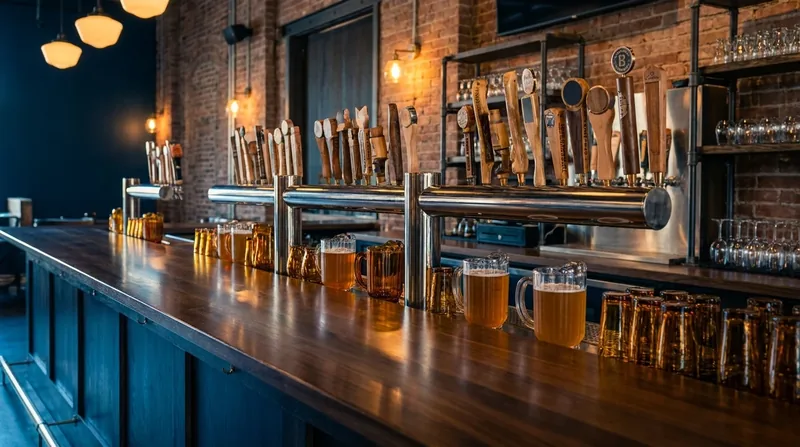
How to Open a Bar in South Carolina: Liquor by the Drink, Liability Insurance and Server Training
How to Open a Bar in South Carolina: Liquor by the Drink, Liability Insurance and Server Training
Opening a bar in South Carolina is a sequence of filings, and the order matters. The liquor by the drink license depends on your building, your kitchen, your seating count and your local rules, so plan the space before you sign a lease. Liability insurance and server training are also requirements you must have in place before your first sale. This guide walks through the steps in the order that causes the fewest delays.
Informational content only. This article is not legal or tax advice. Fees, thresholds and deadlines change, so confirm every figure with the agency named before you sign a lease or commit money to a build-out. For your lease, liquor license structure and tax setup, talk to a South Carolina attorney and a CPA.
What You Will Need Before You Start
- A formed business entity, usually an LLC or a corporation filed with the South Carolina Secretary of State
- A commercial location with at least 40 seats at tables (bar seats do not count), a separate kitchen, and a food operation that holds SCDA Grade A status
- A local business license from your city or county
- An SCDOR retail license, applied for through the Business Tax Application on MyDORWAY
- The $200 liquor by the drink filing fee and the $1,705 license fee, which is charged every two years and prorated
- Budget for a newspaper legal notice and a posted sign at the site
- Liquor liability insurance that meets the rules in effect since January 1, 2026
- A training and recordkeeping plan for every server and manager
Step 1: Form Your Business Entity
Form the entity before you sign a lease, because the liquor application, the SCDOR registration and your insurance policy all need the exact legal name. An LLC filing costs $110 through Business Entities Online at businessfilings.sc.gov. Online filings are returned within 24 to 48 business hours. Mailed and in-person filings take longer, and the Secretary of State does not publish a mail turnaround window.
The name must contain “limited liability company,” “limited company,” “LLC,” “L.L.C.,” “LC” or “L.C.” If you want to hold a name while you finish the paperwork, a name reservation costs $25 and lasts 120 days. It cannot be renewed, so file the formation documents inside that window.
Every South Carolina LLC must keep a registered agent with a street address in the state. The agent can be an individual resident, a domestic corporation, another LLC, or a foreign entity authorized to do business in South Carolina. The agent’s name and address must appear on the formation document. If you change agents later, file a statement of change with the Secretary of State.
A corporation costs $110 to file Articles of Incorporation and must file Form CL-1 with a one-time $25 initial License Fee within 60 days of doing business or using capital in South Carolina. An LLC that is taxed as a corporation has a similar CL-1 and License Fee obligation. A standard LLC files no annual report. A corporation does file one, with its income tax return.
Step 2: Confirm Zoning and Get a Local Business License
South Carolina has no general statewide business license. Registering with the Secretary of State is not a business license. Most cities levy a local business license tax. Nine counties also levy one: Beaufort, Charleston, Dorchester, Horry, Jasper, Marion, Orangeburg, Richland and Sumter. The license year runs May 1 to April 30, and renewals are due April 30 at localblrenewal.com.
Before you commit to an address, ask the city or county planning office whether the site allows on-premises alcohol sales. Local rules can add requirements that the state does not list, and you do not want to discover one after you have signed a lease.
Step 3: Confirm the Space Meets the Rules
The liquor by the drink license requires at least 40 seats at tables. Bar seats are excluded from the count, so a room with a 20-seat bar and 15 table seats does not qualify. Plan the floor plan around the table count first.
The kitchen must be separate and must hold SCDA Grade A status. Retail food permits come from the South Carolina Department of Agriculture, not DHEC. Ask SCDA what plan review it requires before construction starts, so you do not have to tear out equipment or plumbing after the walls are up.
Build-out contractors also face licensing thresholds. Commercial contractor licenses begin above $10,000 in work, and residential specialty registration begins above $500. Confirm current thresholds and the issuing agency before you hire anyone, and make sure each contractor holds the license their scope requires.
Step 4: Register With the SC Department of Revenue
Every seller of tangible goods, including a bar that sells food and drinks, must obtain a retail license from the South Carolina Department of Revenue (SCDOR). The fee is a one-time, nonrefundable $50 per location. You apply through the Business Tax Application on MyDORWAY at dor.sc.gov. The state sales tax rate is 6%. Ask SCDOR how any local sales tax applies to your sales before you open the register.
Step 5: Apply for the Liquor by the Drink (PLB) License
The PLB application is filed with SCDOR. The license carries a $200 filing fee and a $1,705 license fee, charged every two years and prorated. The application also requires a newspaper legal notice published once a week for three consecutive weeks, and a sign posted at the site for 15 days. Confirm the required notice wording, the newspaper requirements and the posting method with SCDOR before you schedule the publication.
Once you are licensed, liquor sold by the drink carries a 5% liquor by the drink excise tax. Set up your point-of-sale system so drink sales can be reported separately, because the excise tax is calculated on those sales.
Step 6: Decide Whether You Need Sunday Sales
Sunday liquor sales are allowed only where local voters have approved them, and only with a Local Option Permit. The permit costs $200 per Sunday or $3,050 per year. Confirm with your city or county clerk whether Sunday sales were approved in your area before you build a Sunday business plan. If they were not, your Sunday revenue assumptions need to change.
Step 7: Buy Liquor Liability Insurance That Meets the 2026 Rules
Under 2025 Act 42, effective January 1, 2026, an on-premises licensee that stays open past 5 p.m. must carry liquor liability coverage with a $1 million annual aggregate. The required amount can be reduced to a floor of $300,000 if the business takes certain measures:
- Closing by midnight
- Requiring alcohol server training for staff
- Keeping alcohol under 40% of total sales
- Using ID scanning
ID scanners are mandatory if you serve between midnight and 4 a.m. The statute sets the reductions, but how several measures combine, and what documentation your insurer needs, are questions for SCDOR and your insurance broker. Get written confirmation of the coverage amount your insurer will issue before you sign the lease, because a shortfall can stop your liquor license from being issued or renewed.
Step 8: Complete Alcohol Server Training for Every Server and Manager
Every server and manager must complete alcohol server training within 30 days of hire. The certificate is valid for three years. This is the requirement behind most searches for SC alcohol server training and SC alcohol server certification, and the deadline runs from each person’s hire date, not from your opening date.
Keep a training roster that lists each employee, the hire date, the completion date and the expiration date. Confirm with SCDOR which courses satisfy the requirement before you pay for one, because a course that is not accepted leaves you out of compliance even though the employee finished it.
Training also supports your insurance position. Coverage can be reduced when server training is part of your operation, so keep the certificates in a file the insurer can request.
Step 9: Set Up Operations and Recordkeeping
- Age verification: Write a written ID-check policy and train staff to use it. If you serve between midnight and 4 a.m., install ID scanners before your first late shift.
- Liquor records: Keep invoices, inventory counts and sales records by category so you can support your excise and sales tax filings.
- Tax accounts: Track sales tax, the 5% liquor by the drink excise tax and payroll taxes on separate lines in your accounting system.
- Staff files: Store each employee’s training certificate with the hire date and expiration date.
Step 10: Calendar Every Renewal
Missed renewals are one of the most common ways a working bar gets into trouble. Put these dates in your calendar before you open:
| Item | Timing | Where to handle it |
|---|---|---|
| Local business license | Renew by April 30 each year | localblrenewal.com or your city or county |
| Liquor by the drink license | Fee charged every two years, prorated | SCDOR |
| Liquor liability insurance | Annual policy renewal | Your insurance broker |
| Server training certificate | Valid three years from completion | Track on your training roster |
| Local Option Permit (Sunday sales) | $200 per Sunday or $3,050 per year | SCDOR, where local voters approved Sunday sales |
| Corporation annual report | With the income tax return, due the 15th day of the fourth month after the business year ends | SCDOR (Schedule D with SC1120 or SC1120S) |
Common Mistakes to Avoid
- Signing a lease before checking the seat count. A bar seat does not count toward the 40 table seats, and a floor plan that looks right on paper can still fail.
- Assuming the Secretary of State registration is your business license. It is not. Most places also require a local license.
- Buying the wrong insurance. A general liability policy does not replace the liquor liability coverage that Act 42 requires after 5 p.m.
- Letting training slip. The 30-day clock starts at each hire date. A new bartender who starts without a certificate puts the license at risk.
- Missing the notice requirements. The newspaper notice runs three consecutive weeks, and the site sign must stay up for 15 days. Missing either can delay your application.
- Ignoring the excise tax. The 5% tax applies to liquor by the drink sales, and it must be tracked separately from your other revenue.
- Using a local name that is not reserved. Confirm the name is available on the Secretary of State records before you print signage.
Tips That Save Time
- File your entity first, then order the registered agent and name reservation in the same step.
- Ask SCDA and SCDOR to confirm requirements in writing when a rule depends on your floor plan.
- Start the newspaper notice early, because the three-week publication schedule sets the earliest date your application can move forward.
- Get the insurance quote before you sign the lease so the premium is part of your opening budget.
- Use the South Carolina Small Business Development Centers at scsbdc.com for free or low-cost planning help, and the SBA’s South Carolina district page at sba.gov for lending resources.
What to Expect When the Steps Are Complete
When the entity, local license, SCDOR retail license, PLB license, insurance and training records are all in place, you can open with the paperwork a regulator or insurer will ask to see. These steps can help you avoid the delays that most often push back opening dates, such as a missing notice, a lapsed certificate or a coverage shortfall. They do not guarantee a fast approval, because agency processing times and local requirements vary, so confirm current timelines with each agency before you set an opening date.
Revenue, customer counts and profitability depend on your concept, location and management. No filing can promise those results, and the steps above should be treated as the compliance foundation for the business rather than a forecast of its performance.
Where to Confirm Each Requirement
- South Carolina Secretary of State, entity filings: sos.sc.gov
- South Carolina Department of Revenue, retail license, PLB and tax accounts: dor.sc.gov
- Local business licenses: localblrenewal.com and your city or county office
- South Carolina Small Business Development Centers: scsbdc.com
Next Steps
Start with the entity and the site, because those two decisions set the timeline for everything else. Confirm the seat count, the kitchen plan and the local Sunday sales status before you spend money on design. Then file the state paperwork, buy the insurance, and train your staff before the first shift. A bar that follows this order usually avoids the most expensive rework.
Reminder: This article is informational content, not legal or tax advice. Confirm current fees, thresholds and deadlines with the named agency, and consult a qualified South Carolina attorney and CPA for your situation.
Keep exploring: related South Carolina guides
- How to Start a Vending Machine Business in South Carolina
- How to Open a Restaurant in South Carolina
- How to Start a Food Truck in South Carolina
- How to Start a Bakery Business in South Carolina
- How to Get a Liquor License in South Carolina
- How to Start an LLC in South Carolina
- South Carolina Business License
- How Much Does It Cost to Start a Business in South Carolina
- All South Carolina business types
- Every South Carolina guide in one place