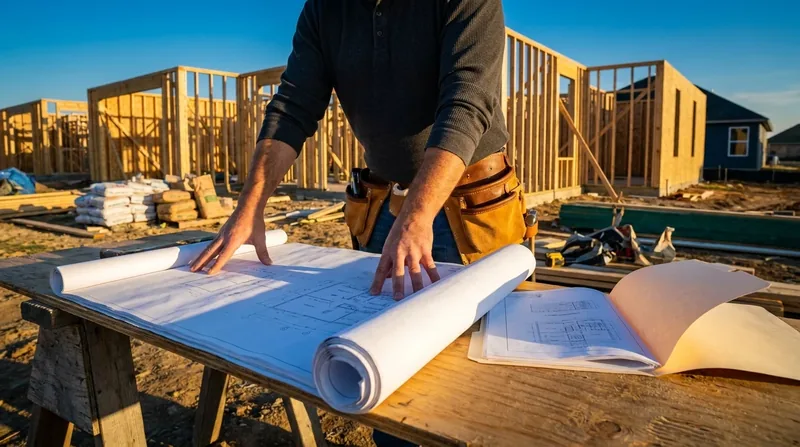
How to Start a Home Building or Remodeling Business in South Carolina: Residential Builder License
How to Start a Home Building or Remodeling Business in South Carolina: Residential Builder License
If you plan to build homes or remodel houses for other people in South Carolina, you will almost certainly need a residential builder license. The South Carolina residential builder license is issued through the Residential Builders Commission (RBC), which sits inside the South Carolina Department of Labor, Licensing and Regulation (LLR). The license shows that you have the experience, technical knowledge, and business basics to run a residential job, and it gives homeowners a way to confirm who they are hiring.
This guide walks through who needs the license, what to gather before you apply, the exams and fees, how to set up the company that holds the license, and the mistakes that commonly cause delays.
This article is informational content, not legal or tax advice. Fees, forms, and rules change. Confirm every figure with LLR, the Secretary of State, or the Department of Revenue before you pay or file. For contract, liability, or ownership questions, consult a South Carolina attorney. For tax questions, consult a certified public accountant (CPA).
Who Needs a Residential Builder License in South Carolina?
The RBC residential builder license is required when the cost of the undertaking exceeds $5,000. It covers residential buildings up to 3 floors and 16 units. A project beyond those limits may fall under a different license category, so ask LLR which category applies before you bid.
The $5,000 test looks at the cost of the undertaking, meaning the total value of the job, not one line item on one invoice. Do not split a single project into smaller contracts to stay under the line unless you have checked with LLR how it is counted.
Two related thresholds matter too. Commercial contractor licenses start above $10,000, and residential specialty registration applies to work above $500. Commercial work falls under its own license track, so a residential license alone will not cover it.
South Carolina has no general statewide business license. The residential builder license is a trade license, and you will still need the local and tax registrations covered in Step 9.
What to Have Ready Before You Apply
Gather these items before you open the application so nothing stalls mid-submission.
- Work history showing at least one year of hands-on residential experience within the last five years
- A supervisor experience affidavit, if your experience was under another person's supervision
- A complete credit report
- A $15,000 surety bond issued in your name as the individual licensee
- Exam registration with PSI for the residential builder technical exam and the business management and law exam, or documentation for a technical exam waiver
- $135 application fee and $220 license fee
- Your business entity documents, if you will operate through a company such as an LLC or corporation
- A Certificate of Authorization for the company, unless you own at least 51 percent of it
- A computer and email address for the LLR online application platform, in use since February 2, 2026
Step-by-Step: How to Get Your SC Residential Builders License
Step 1: Confirm your scope and license category
Write down the kinds of projects you expect to take on, typical job values, and the highest floor count and unit count you plan to build. If typical jobs exceed $5,000 and fit inside 3 floors and 16 units, the RBC residential builder license is the one you need. If you expect commercial jobs, plan for the commercial track as well, because that license starts above $10,000 and has separate requirements.
Step 2: Document your hands-on experience
The RBC requires one year of hands-on experience within the last five years. Build a table with each project's dates, the employer or company name, your duties, and a contact who can confirm your role. Invoices, permit records, and payroll records make the claim easier to verify. If you worked under a supervisor, complete the supervisor experience affidavit so the person who oversaw your work can attest to it. Keep copies of everything you submit.
Step 3: Pull a complete credit report
Request a complete credit report and review it before you submit. Check for errors, and if you find any, start the dispute process early, because corrections can take time. Bonding companies often review credit as well, so a problem on the report can affect Step 4 too.
Step 4: Obtain a $15,000 surety bond
The residential builder license requires a $15,000 surety bond in the individual's name. Work with a surety agent, request quotes, and compare the premium along with the terms. The bond belongs to you as the individual applicant, not to your LLC or corporation, so make sure your name on the bond matches your name on the license application exactly.
Step 5: Register for and pass the exams
PSI administers the exams. You will take the PSI residential builder technical exam and the business management and law exam. Schedule both early so test dates do not hold up your application. Check PSI's registration information and LLR for current exam fees, because this guide does not list them.
You may qualify to waive the technical exam if you hold one of the following:
- A license of at least one year that was based on an exam, issued by Alabama, Georgia, Mississippi, or North Carolina
- A South Carolina Contractor's Licensing Board (CLB) Building or Limited Building license
- The NASCLA commercial building exam, taken within the last 3 years
Two limits apply. A waiver covers only the technical exam, so you still take the business management and law exam. Waiver licenses also cannot be used for mechanical trades, so confirm your scope before relying on a waiver.
Step 6: Form the business entity
If the company will hold the contracts, form it before you submit the application so the legal name is settled. Check name availability in the Secretary of State business search at businessfilings.sc.gov. You can reserve a name for 120 days for $25, but the reservation cannot be renewed.
For an LLC, file Articles of Organization for $110 through Business Entities Online at businessfilings.sc.gov. The name must contain the words limited liability company or limited company, or an abbreviation such as LLC, L.L.C., LC, or L.C. The LLC must also keep a registered agent in South Carolina with a street address. A standard LLC files no annual report and pays no annual license fee.
For a corporation, file Articles of Incorporation for $110 together with Form CL-1 Initial Annual Report of Corporations. The CL-1 carries a one-time $25 initial License Fee, due within 60 days of doing business or using capital in South Carolina. Corporations also file an annual report with the SC1120 or SC1120S. The recurring License Fee is 0.1 percent of capital and paid-in surplus plus $15, with a $25 minimum. C corporations pay a 5 percent corporate income tax on South Carolina taxable income.
Before you finish, talk with a CPA about whether an LLC or corporation fits your situation. Entity choice has tax and liability consequences that this guide does not cover.
Step 7: Apply for a Certificate of Authorization
The company needs a Certificate of Authorization unless the licensee owns at least 51 percent of it. If you own less, plan to obtain one for the company. LLR sets the fee and the process, so confirm them on the LLR site and ask whether the certificate is filed with your individual application or separately.
Step 8: Submit the application through LLR's online platform
Submit through the LLR online application platform, which has been in use since February 2, 2026. Enter or upload your credit report, experience records, affidavit, bond information, and exam details. Pay the $135 application fee and the $220 license fee. Save every confirmation number and receipt. This guide does not cover LLR's processing time, so ask the agency for current timing before you schedule jobs, sign contracts, or advertise a start date.
Step 9: Register locally and for tax
South Carolina has no general statewide business license, but local business license taxes are levied by most cities and by nine counties: Beaufort, Charleston, Dorchester, Horry, Jasper, Marion, Orangeburg, Richland, and Sumter. Local licenses run on a May 1 to April 30 license year and are due April 30. Renew at localblrenewal.com. If your county is not on that list, check whether your city levies its own tax. Confirm the local rules with your city or county.
There is no state DBA filing. The Secretary of State does not register trade names. Record a DBA with your county or municipality, typically on your local business license, and list the trade name on your IRS EIN application and the SCDOR Business Tax Application.
If any part of your business sells tangible goods, you need a Retail License from the South Carolina Department of Revenue (SCDOR). It is a one-time, nonrefundable $50 fee per location, applied for through the Business Tax Application on MyDORWAY. Ask SCDOR whether your billing structure triggers this requirement.
Step 10: Calendar your renewal
The residential builder license renews every two years for $220. Renewals are due by June 30 of even years. Check the expiration date on your license, because your first renewal date depends on when the license is issued. Put the renewal on your calendar well ahead of the deadline, and renew on time rather than after.
Tips for a Cleaner Application
- Start the bond and credit steps first, since both depend on outside parties.
- Use one legal name everywhere: LLR filings, Secretary of State records, bank accounts, the IRS EIN, and insurance policies.
- Keep a single spreadsheet of projects and dates so your experience record is ready to submit.
- Confirm your waiver eligibility before you pay for exams.
- Keep copies of every filing, payment, and exam score report.
- Talk with an insurance agent about liability coverage before you sign your first contract. Insurance is outside the scope of this guide.
Common Mistakes to Avoid
- Bidding or signing a residential contract above $5,000 before the license is issued.
- Splitting one project into smaller contracts to stay under the threshold without asking LLR.
- Putting the $15,000 surety bond in the company's name instead of the individual's.
- Assuming a waiver covers the business management and law exam.
- Using a waiver license to perform mechanical trades.
- Forming an LLC without the required name words, or choosing a name too close to one already on file.
- Corporations that miss the 60-day deadline for Form CL-1 and its $25 initial License Fee.
- Treating Secretary of State registration as a business license. It is not one.
- Missing the April 30 local business license renewal.
- Working from old forms or instructions instead of the current LLR online platform.
Expected Results
A residential builder license may allow you to bid and sign residential contracts that fit within the RBC scope. Applicants who gather their experience records, credit report, bond, and exam documents before filing may find that the application moves with fewer requests for more information, although LLR controls its own timing. Results depend on your experience, your exam performance, and the accuracy of your filings. This guide cannot promise an approval date, a passing exam result, or any level of business volume.
Next Steps
Start with the scope check in Step 1, then build your experience table and order your credit report. Once the entity name is settled, file with the Secretary of State through the SC Secretary of State's business entities page, and register your tax accounts with the South Carolina Department of Revenue. The South Carolina Small Business Development Centers can help you think through the business side of the plan. For license-specific questions, go to LLR directly. Before you sign your first contract or take a deposit, have a South Carolina attorney review your contract terms, and have a CPA review your entity and tax choices.
Keep exploring: related South Carolina guides
- How to Start a Pool Construction or Pool Service Business in South Carolina
- How to Start a Roofing Business in South Carolina
- How to Start a Plumbing Business in South Carolina
- How to Start a Septic Installation or Pumping Business in South Carolina
- How to Get a Contractor License in South Carolina
- How to Start an LLC in South Carolina
- South Carolina Business License
- How Much Does It Cost to Start a Business in South Carolina
- All South Carolina business types
- Every South Carolina guide in one place