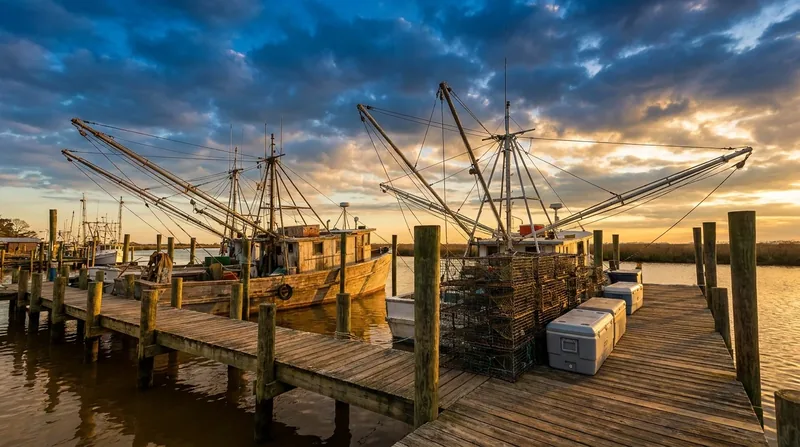
How to Start a Charter Fishing Business in South Carolina: SCDNR Charter Vessel License
How to Start a Charter Fishing Business in South Carolina: SCDNR Charter Vessel License
If you plan to take paying anglers out of a South Carolina port, the permit you cannot skip is the SCDNR charter vessel license. The South Carolina Department of Natural Resources (SCDNR) issues it per vessel, and it sits on top of three other pieces that first-time operators often underestimate: a business entity, a local business license, and a U.S. Coast Guard captain credential. This guide puts those pieces in the order that works, lists the figures confirmed from official sources, and flags the points you need to check with the agency before you commit money to a boat or a booking calendar.
If you searched for a south carolina charter fishing license, an sc charter boat license, or an sc charter vessel license, you are looking for the same permit. The commercial shrimp and crab licenses, including an sc shrimp license, fall in a separate category. We cover them near the end so you do not mix them up with the charter permit.
What the SCDNR Charter Vessel License Covers
The charter vessel license is issued for each vessel you run for hire. It is not issued to you as a captain, and it is not issued per trip. The license is valid for the state fiscal year and expires June 30, so renewal is an annual calendar item for every boat in your fleet. Your fee depends on the maximum number of passengers the vessel carries, and nonresident owners pay double the resident fee in each tier. The fees below apply to the 2026 to 2027 fiscal year.
| Maximum passengers | Resident fee | Nonresident fee |
|---|---|---|
| 6 or fewer | $275 | $550 |
| 7 to 49 | $450 | $900 |
| 50 or more | $650 | $1,300 |
Anglers who fish from a licensed charter vessel do not need their own saltwater fishing license under S.C. Code Section 50-9-715. That is a useful point to explain on your booking page, but confirm the current wording with SCDNR before you publish it.
Materials and Documents to Gather First
Collect these items before you open the application. A missing document is the most common reason a first application stalls.
- Business entity papers, if you operate as an LLC or corporation (see Step 1)
- A federal Employer Identification Number (EIN) from the IRS
- A copy of your U.S. Coast Guard captain credential, such as the OUPV license, often called the six-pack
- Vessel details: the boat name, the registration or documentation information SCDNR requests, make, and length
- Your maximum passenger count as the vessel is rigged for charter
- Your local business license from the city or county where the boat is based or where you operate
- A payment method accepted by Go Outdoors South Carolina
- A trip log template so you can start recording trips on day one
Step-by-Step: How to Get Your Charter Vessel License
Step 1: Choose and form your business entity
Pick your structure before you buy the license, because the license goes in the name of the business that operates the boat. A sole proprietorship needs no filing with the state. An LLC is a common choice for charter operators, and its formation filing is straightforward.
To form a domestic LLC, file Articles of Organization under S.C. Code Section 33-44-203 with the South Carolina Secretary of State. The filing fee is $110. Use Business Entities Online at https://businessfilings.sc.gov/ for the fastest route. The state says documents filed online are returned within 24 to 48 business hours. The Secretary of State does not publish a separate expedite fee, and mailed or in-person filings take longer.
Three rules catch people. First, the name must include limited liability company, limited company, or an accepted abbreviation such as LLC or L.L.C. Search the name at https://businessfilings.sc.gov/BusinessFiling/Entity/Search before you file, because it must be distinguishable from names already on the state records. Second, you need a registered agent with a South Carolina street address, and that agent's name and address must appear on the Articles. Third, a standard LLC files no annual report with the Secretary of State. If you need to hold a name while you prepare documents, a name reservation costs $25 and lasts 120 days. It cannot be renewed.
Corporations are also possible under Articles of Incorporation filed with Form CL-1. Most small charter operators do not need that structure, so talk with an attorney or CPA before you choose it.
Step 2: Get an EIN and register your business with SCDOR
Apply for a federal EIN directly through the IRS website. You will need the EIN on the state tax application, and a separate business bank account is easier to set up once the EIN is in hand. Then register through the SCDOR Business Tax Application on MyDORWAY at https://dor.sc.gov/. South Carolina taxes C corporations at 5 percent of South Carolina taxable income. Individuals pay graduated personal income tax. For tax year 2026, the SCDOR lists two brackets, 1.99 percent on income under $30,000 and 5.21 percent on income of $30,000 and above, less a $966 adjustment. Your accountant should model which structure fits your expected income.
The state sales tax rate is 6 percent. Whether your charter fees carry state sales tax is a question to settle with SCDOR before you publish prices, so check with the Department of Revenue first. If you sell bait, tackle, or merchandise, you need a Retail License from SCDOR, which carries a one time nonrefundable $50 fee per location.
Step 3: Confirm your U.S. Coast Guard captain credential
The SCDNR application asks for a copy of your U.S. Coast Guard captain credential. The six-pack, formally the Operator of Uninspected Passenger Vessels (OUPV) credential, is a common credential for small charter captains. Obtain it before you buy the license, and confirm with the U.S. Coast Guard National Maritime Center that your credential matches the vessel size and route you plan to run. Keep a clear digital copy in your business records and a paper copy on the boat.
Step 4: Count passengers and choose your fee tier
The tier is set by the maximum number of passengers the vessel carries, so count the seats you are rated to carry, not the number you usually fill. A boat that carries six passengers falls in the $275 resident tier. Add a seventh passenger and the resident fee rises to $450. That jump is a planning point. If you expect to add capacity later, price the next tier into your startup budget. Ask SCDNR how a mid-year change in passenger capacity is handled before you increase the count.
Step 5: Get your local business license
South Carolina has no general statewide business license. Your local license comes from the city or county where the business operates. Most cities levy business license taxes. Only nine counties do: Beaufort, Charleston, Dorchester, Horry, Jasper, Marion, Orangeburg, Richland, and Sumter. Local licenses run on a May 1 to April 30 license year and are due April 30. Renew at https://localblrenewal.com.
Your boat's home port and the place where you take bookings can both affect which jurisdiction applies, so ask the city or county clerk which license you need. A Secretary of State filing is not a business license, so forming the entity alone does not let you operate.
Step 6: Buy the charter vessel license through Go Outdoors South Carolina
Purchase the license through Go Outdoors South Carolina, selecting the Commercial License option. Enter the vessel details, choose the passenger tier that matches the vessel, and pay the resident or nonresident fee that fits your situation. If your residency status is unusual, for example an owner who lives out of state but keeps the boat in South Carolina, confirm it with SCDNR before you pay.
Each vessel needs its own license. A captain who runs two boats buys two licenses, and each one expires June 30. Save the purchase confirmation with your vessel records.
Step 7: Keep monthly trip logs
Charter vessels must file trip logs with SCDNR, and they are due by the 10th of each month. Build your log sheet before your first trip. Record each trip on the day it happens, including the date, departure port, and number of anglers. Confirm the exact log format and which month each report covers with SCDNR, since the agency sets the form. A missed log is the easiest compliance problem to avoid and the easiest to fall into during a busy peak season.
Step 8: Keep commercial shrimp and crab licensing separate
A charter vessel license does not cover selling fish, shrimp, or crab you catch. If you plan to sell shrimp or crab, you need a separate commercial license. Ask SCDNR which commercial shrimp or crab license fits your plan, what it costs, and whether it can be held on the same vessel as the charter permit. Those figures are not part of the charter fee table above, so get the answer in writing before you build it into a business plan. The same applies to any other South Carolina commercial fishing license you consider.
Key Dates to Put on Your Calendar
| Requirement | Timing |
|---|---|
| Trip logs to SCDNR | Due by the 10th of each month |
| Local business license renewal | Due April 30, license year May 1 to April 30 |
| Charter vessel license renewal | Expires June 30 each fiscal year |
Tips for a Smoother Application
- Form the entity and get the EIN first, then apply for the charter license in the entity name.
- Put June 30, April 30, and the 10th of every month on your calendar before your first booking.
- Keep digital and paper copies of your captain credential, vessel details, and purchase confirmation on the boat.
- Use the South Carolina Small Business Development Centers at https://www.scsbdc.com/ for planning help, and review the SBA South Carolina district page at https://www.sba.gov/district/south-carolina for counseling and financing resources.
- Ask an insurance agent about passenger liability coverage before your first paid trip. Do not assume a personal policy covers paying passengers.
Common Mistakes to Avoid
- Counting the passengers you hope to sell instead of the capacity the vessel is rated to carry. Choose the tier you can operate within.
- Buying one license and assuming it covers a second boat. Each vessel needs its own license.
- Publishing rates before confirming the sales tax treatment of your charter fees with SCDOR.
- Mixing up the June 30 charter license cycle with the April 30 local license cycle.
- Blending the charter permit with commercial shrimp or crab licensing.
- Leaving the licensing point off your booking page. Many anglers ask whether they need their own license, and under S.C. Code Section 50-9-715 they do not when they fish from a licensed charter vessel.
- Treating the Secretary of State filing as the whole setup. Entity formation does not replace the charter license, the local license, or the captain credential.
Expected Results
A complete, correctly filed application can give you a licensed vessel and a clear compliance calendar. It does not guarantee bookings, and results depend on your boat, your location, your pricing, and your marketing. Operators who gather documents first and file in the order described above may be able to move through the process more smoothly. SCDNR processing time for the charter license is not something this guide can state, so confirm current timing with the agency and build a buffer into your first charter date.
Important Information
This article is informational content, not legal or tax advice. Fees, forms, and rules change. The figures above come from the state sources checked for this guide, and you should confirm each step with the South Carolina Department of Natural Resources (https://dnr.sc.gov/), the Secretary of State, and the Department of Revenue before you act. Because a charter business involves liability, passenger safety, taxes, and entity choices, talk with a South Carolina attorney, a CPA, and a licensed insurance agent before you launch.
Keep exploring: related South Carolina guides
- How to Start an Airbnb in Myrtle Beach and the Grand Strand
- How to Start a Golf Cart Rental Business in South Carolina
- How to Start an Airbnb on Hilton Head Island
- How to Start a Short-Term Rental Business in South Carolina
- How to Start an LLC in South Carolina
- South Carolina Business License
- How Much Does It Cost to Start a Business in South Carolina
- All South Carolina business types
- Every South Carolina guide in one place